El Niño Hits St. John And The Virgin Islands
El Niño has performed a grand vanishing act here in the Virgin Islands by disappearing the 2026 hurricane season. Not a single hurricane has been tracked coming our way. That sounds wonderful. But, the cost we are paying El Niño, the magician, is that our yards are brown, our cisterns — where we all get our drinking water — are getting low, and there's a burn ban sign up that wasn't there a few months ago.
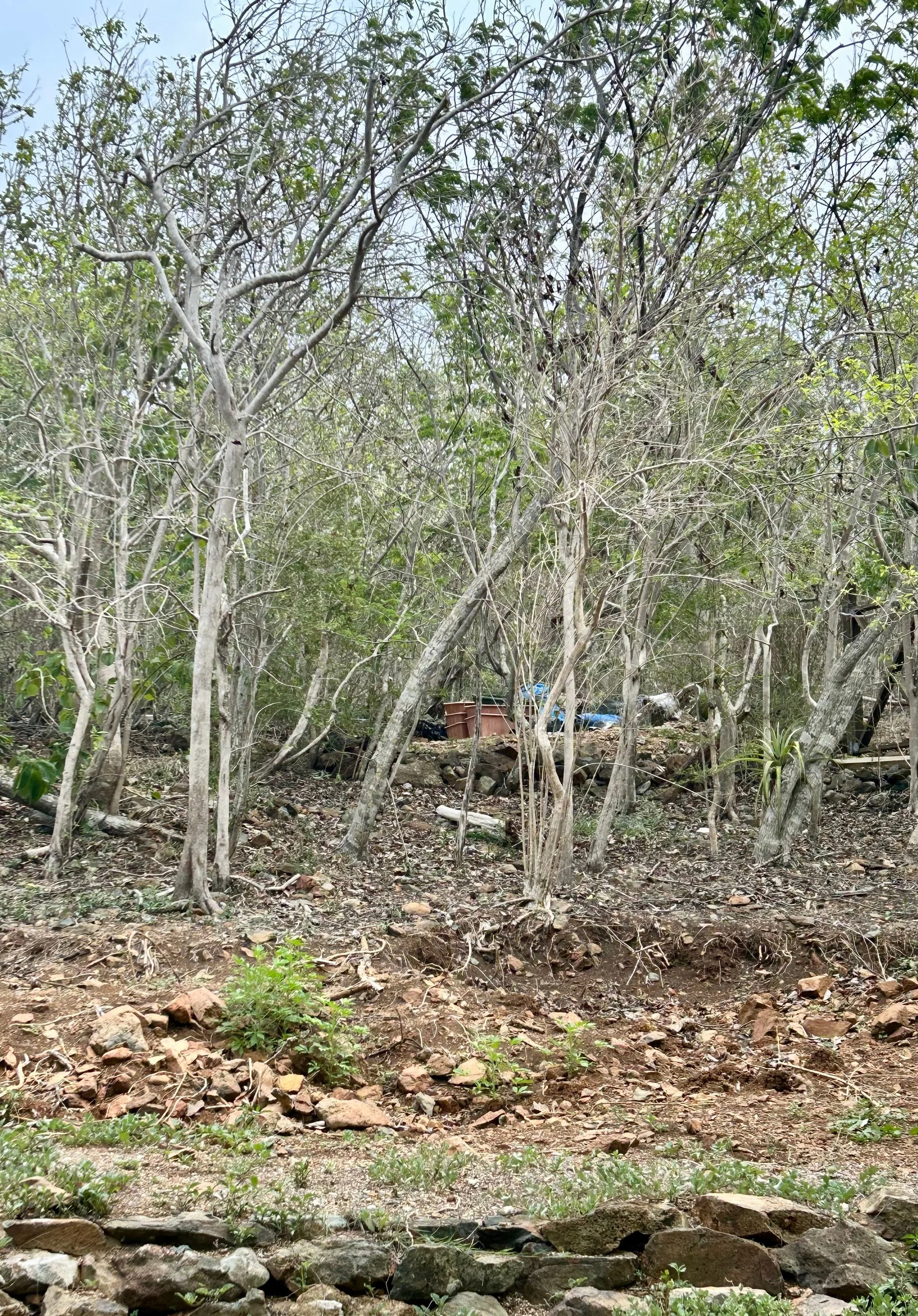
Image: A browning landscape in St. John because of El Niño — the trees would normally be covered in green. Credit: Island Roots Charters
What El Niño Is, And The 2026 Forecast
El Niño is a term that’s been thrown around loosely on weather channels without going into detail. To be specific, El Niño is the warm phase of a Pacific Ocean cycle called ENSO (El Niño Southern Oscillation). What it does is heats up areas of the Pacific, which causes a change in ocean temperature that increases wind shear over the Caribbean. This wind shear basically blows any baby hurricanes that may head our way into oblivion.
2026 has been a particularly strong phase. NOAA's Climate Prediction Center issued an official El Niño Advisory back in June. Forecasters started saying in August that very strong El Niño conditions could persist through the peak of hurricane season, and now El Niño is starting to be referred to as a "super El Niño." It’s getting serious.
Will There Really Be No Storms Or Hurricanes To Hit The Virgin Islands In 2026?
It’s not that hurricanes cannot happen this year — NOAA's final 2026 outlook called for a below-normal Atlantic season, meaning what’s likely are: 7 to 13 storms, 2 to 6 hurricanes, and 0 to 2 major hurricanes, which is way better odds than the typical hurricane season we get. So, we could still get a bad hurricane, it’s just not very likely.
El Niño Conditions On The Ground In St. John, USVI
For us on St. John, that forecast has matched real life conditions in that we have not had to strip down patio furniture, haul our charter boats to a hurricane hole, or board up our windows a single time this year. This all is highly unusual for this point in the season, and just feels weird (albeit a relief). The old caveat that it only takes one storm finding our island to make it a bad year of course makes it so we can never truly let down our guard.
2026 Drought In St. John
Instead of having hurricanes, El Niño is bringing us a drought. In August, Governor Albert Bryan Jr. formally requested a federal drought disaster declaration, citing extreme drought conditions across St. Croix, St. Thomas, and St. John.
Because most homes and businesses in the USVI depend on cisterns that collect and store rainwater rather than a municipal water supply that gets its water from a reservoir or aquifer, when the rain stops, the drinking water stops. There is no backup water source for most of us here. Not only is El Niño making it dry here, but the temperatures have been up too. Looking out of the window and seeing that everything outside is brown, and knowing that a lot of people on island are vigilantly watching their cistern levels, is the dark side of El Niño in the Virgin Islands.
The VIFEMS (Virgin Islands Fire and Emergency Medical Services) has issued a burn ban across the USVI because this windy, dry weather creates an elevated fire risk. That means no campfires, bonfires or burning yard debris, brush or trash.
It's truly strange to see St. John go from a lush green to being dry enough that a single spark or an unattended grill could genuinely start a wildfire in a place that is normally always wet.
Underwater Impacts
The warmer ocean water causes more coral bleaching as well — which happens when water temperatures go above 84°F.
By mid-August, Caribbean Coral Reef Watch monitoring showed this stressor occurring in Florida, the Bahamas, Cuba, and the western and southern Caribbean. Forecasters warn it could spread into other Caribbean regions as well. In 2005 to 2006 a bleaching event killed around 60 percent of the coral around St. John after a disease outbreak followed an initial bleaching incident, so another wave of risks like this is something we’re watching carefully.
When You Visit
If you're snorkeling or swimming on a charter with us this season, it’s a good year to be mindful about doing our part and not touching the coral. What is there is definitely worth visiting, and seeing for as long as we can keep this beautiful paradise.