Barracudas, Moray Eels & Lobsters — Marine Predators Of The Virgin Islands
In-water activities — like swimming, snorkeling, and diving — make up 90% of what there is to do for fun in the Virgin Islands. In this article, we’ll look at three marine life predators you could encounter while exploring the shallows and depths of the Caribbean.
Barracuda: A Tropical Ambush Master
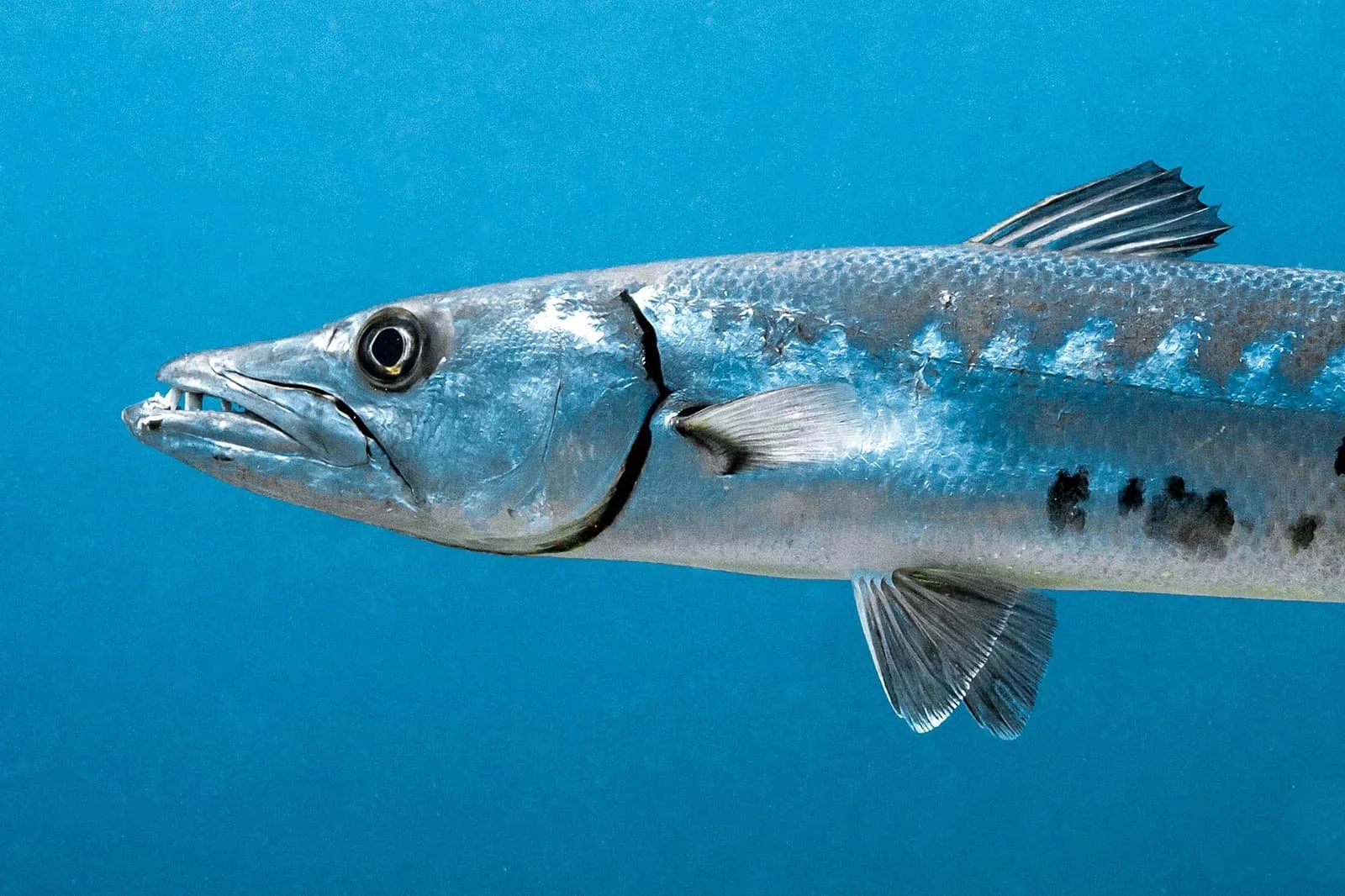
Photo: Barracuda around St. John, Virgin Islands / Credit: Max Kostenblatt / Island Roots Charters
The Great Barracuda (Sphyraena barracuda) patrols the Virgin Islands reefs around St. John and other islands, for prey such as grunts, snappers, jacks, parrotfish, and squid. The barracuda is a tropical fish that strikes fear into humans for good reason: this long, slender fish with razor-sharp teeth appears out of nowhere, and sits motionless off in the distance as it surveys its prey. And then it strikes with explosive speed, without warning — earning it the fitting reputation of an ambush predator.
Hit by what amounts to a precisely targeted, six-foot-long, 100-pound torpedo with a 200-tooth mouth, moving at close to 40 mph, prey don’t even have time to react before they are slashed, sometimes sliced in half. Then, as the severed fish drifts aimlessly in a swirl of its own blood, the barracuda circles back to finish it off.
The military even often names especially fast, stealthy and lethal weapons after the barracuda, such as:
Anduril’s Barracuda‑M Family of cost-efficient cruise missiles capable of high-G maneuvers at over 500 knots.
The Raytheon Barracuda is a system that autonomously detects and targets underwater mines.
The Safehaven Marine Barracuda is a speedy, radar-evading, military-grade patrol boat that reaches a top speed of 52 mph—just slightly faster than a barracuda.
Virgin Island Barracuda Attacks
Barracuda attacks on humans are rare. It’s another one of those ‘you’re more likely to be struck by lightning’ scenarios. But, there have been documented barracuda bites in the Vi:
Brad McQueen’s left thumb was attacked by what he described as a big, six-foot-long barracuda in the waters of St. Thomas in May 2024. It happened as he was rinsing a butter bowl in the sea from the boat he was in. He had used the bowl to dip his fresh-caught Caribbean lobsters. The bite severed bone, tendon, and nerve rendering it useless, and requiring complex surgery.
Pam P’s foot was bitten by a five-foot-long barracuda around 2020 as it dangled in the water as she lay on a raft in the sea out in front of Marriott Frenchman’s Cove in St. Thomas. It required a trip to urgent care, and five stitches.
Rita G. was also bitten on the calf close to shore in Magen’s Bay, St. Thomas. It required nine stitches. She reported that she never saw it coming until it slammed hard into her leg.
The St. Thomas Dive Center has noted that there have only been twenty-five recorded barracuda attacks on humans over the last hundred years.
Will I Get Attacked By a Barracuda While Swimming or Snorkeling?
The chances are you won’t get bitten by a barracuda while snorkeling or swimming around the Virgin Islands. Most of the time, barracudas attack by mistake because they’re curious or are targeting a shiny object (don’t wear jewelry) that mimics the scales of their natural prey. In two of the above cases — feet flicking in the water off a raft and the digits of a hand moving back and forth across a bowl at the top of the water — it could be a case of mistaken identity. The calf attack, though, reflects the random nature of ocean life, which is why it is important to charter a boat with a captain certified in sea safety and first aid. When rare accidents happen, emergency preparedness is key.
Moray Eels Don’t Belong In Horror Movies, Until They Bite
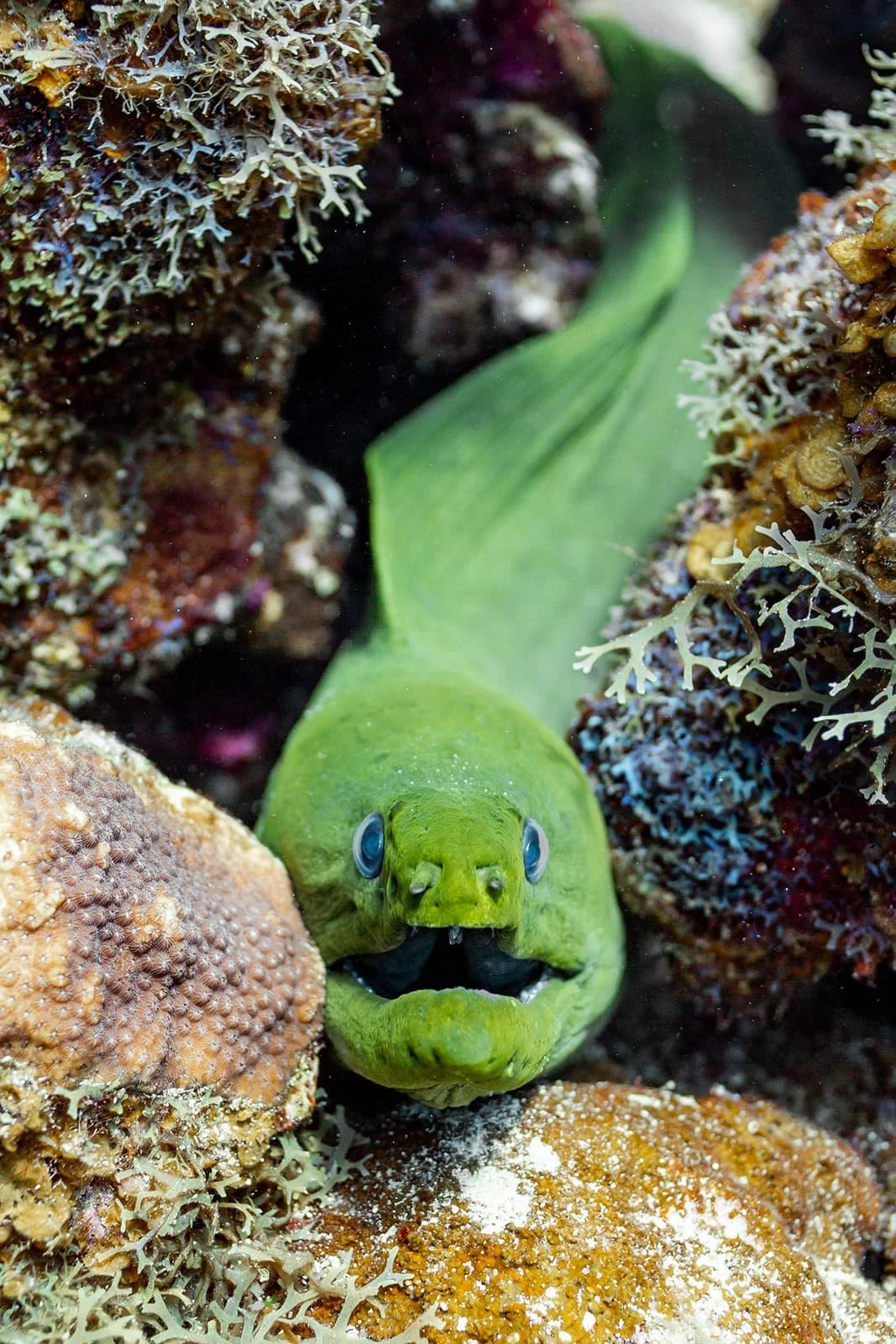
Photo: Green Moray Eel Credit: Max Kostenblatt / Island Roots Charters
There is a 1994 film titled Moray about a monster eel that comes for high school students on a river trip. Only a few of the 200 species of Moray (Muraenidae) eels can live in freshwater brackish waters. Just like the movie Jaws did for sharks, the movie Moray perpetuates an irrational fear of eels that isn’t justified, at least not to that degree.
However, moray eels do have powerful jaws. One diver almost lost a right arm in the tropical waters of Cuba because of a crushing moray eel bite. Unprovoked bites are extremely rare.
In Phuket, Thailand, there was a six-foot-long moray eel with a big head—named Emma by some and Scarface by others—that had become famous among local diving instructors, whom she allowed to feed her. She lived under a table coral, and when divers approached, she would come out to greet them. One morning, diving instructor Matt Butcher arrived, and the moray eel came out and played with him and his group. But when he began hand-feeding her, she latched onto his thumb, and shook her head. That’s when he heard a loud pop and realized it had been bitten off.
Someone posed a question on Reddit asking whether there are any fatal Moray bites, and no one could point to any proof that there has been. There does not seem to be any verified record of a human dying solely because a moray eel bit them. If there were, it may not have been from the mechanical injury of the bite itself, as secondary bacterial infections, like Vibrio, can be a risk as well.
Moray Eels Around St. John, USVI
Snorkelers can find many types of moray eels around St. John, USVI, such as:
| Moray Eel Species | Reported Sightings Around St. John, USVI |
|---|---|
| Green moray (Gymnothorax funebris) |
• Gibney Beach / Hawksnest Bay • Maho Bay / Little Maho |
| Spotted moray (Gymnothorax moringa) | • Waterlemon Cay / Leinster Bay |
| Golden‑tail moray (Gymnothorax miliaris) |
• Waterlemon Cay / Leinster Bay • Hawksnest Bay |
| Chain moray (Echidna catenata) |
• Great Lameshur Bay • Waterlemon Cay / Leinster Bay |
Caribbean Spiny Lobsters (Panulirus argus): Predators That We Eat
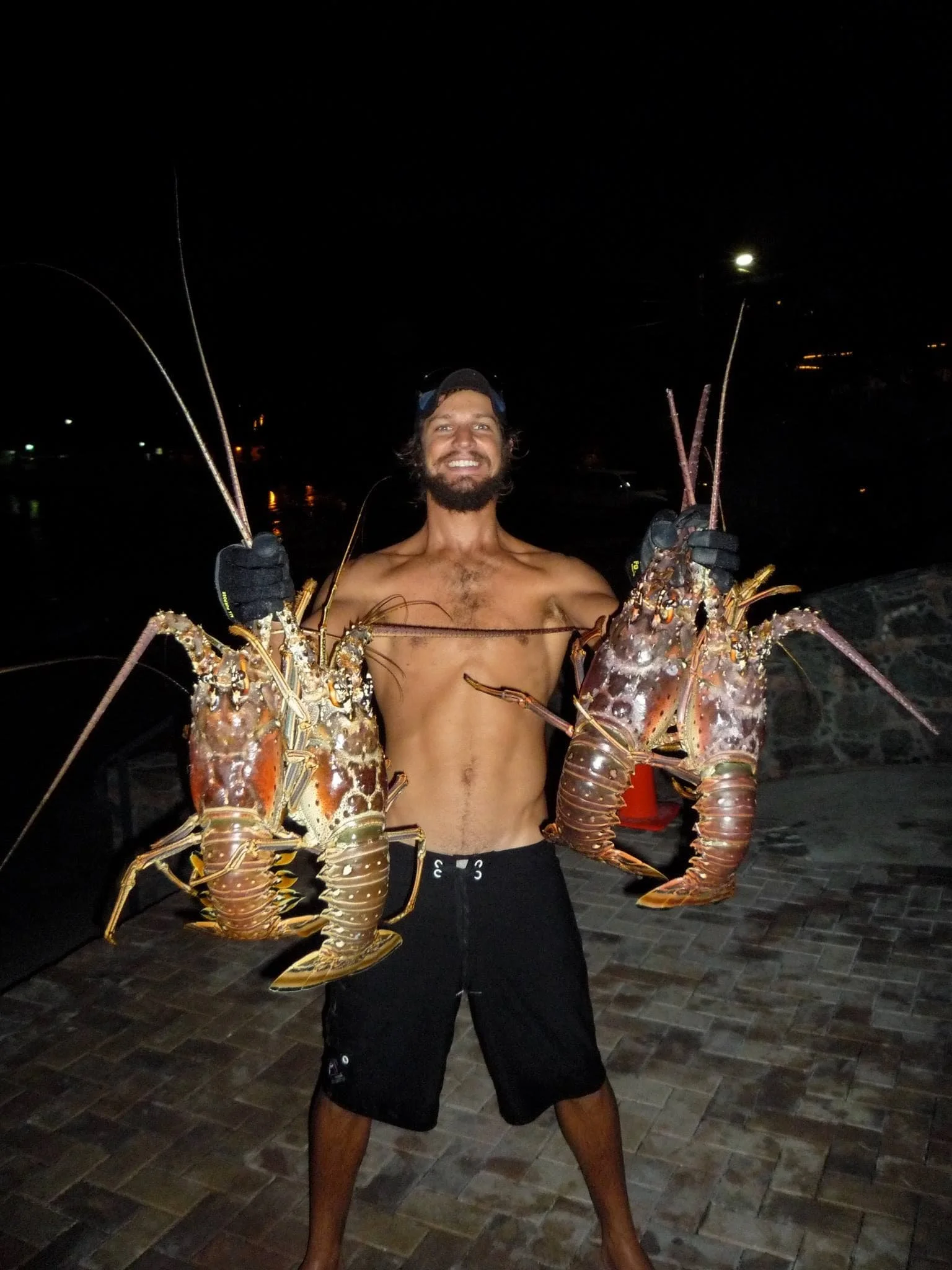
Captain Jason Siska as a young man with the Caribbean spiny lobsters he and a friend caught.
How Caribbean Spiny Lobsters Were Part Of The Island Roots Charters Origin Story
There was a time when Captain Jason Siska was young and broke. He had just started dating his wife and co-owner of Island Roots Charters, Jill Siska. He and a friend would hunt Caribbean spiny lobsters around St. John, USVI, and trade them at restaurants for dinner dates, giving him a way to take Jill out for fine dining. They don’t lobster as much as they used to, but it’s still a favorite pastime and a heartwarming story. He’s looking forward to teaching his son, Finn, the art of lobstering too—this time with a much bigger catch in mind.
Caribbean Spiny Lobster Versus Maine Lobster
| Feature | Caribbean Spiny Lobster | Maine Lobster |
|---|---|---|
| Claws | No claws; the tail meat is what people eat. | Big claws used for crushing; both claws and tail are eaten. |
| Spines | Has sharp spines along its body and antennae. | Doesn’t have spines. |
| Taste & Texture | Tail meat is sweet, tender, and delicate. | Rich taste and firm texture meat in both tail and claws. |
| Size & Weight | Up to 24 inches long including antennae, but usually weighs 1–3 lbs. | Usually 12–24 inches long, weighing 1–8 lbs. |
| Habitat | Found in warm Caribbean waters, in coral reefs, rocky ledges, and mangroves. | Cold Atlantic waters on rocky, sandy bottoms. |
| Prey | Eats mollusks, crabs, worms, sea urchins | Eats mollusks, crabs, small fish |
| Defense | Hides during day in crevices, uses spines and tail-flips to escape. | Hides under rocks, hard shell and claws for defense. |
Caribbean spiny lobsters are predators — of snails, clams, smaller crabs, and sea urchins, and whatever else they can find — that no one really thinks of, mostly because they are hunted as prey by humans, and an excellent meal (mild and sweet) dipped in melted butter, as long as you don’t wash the bowl out off of the boat.
However, make no mistake these lobsters can grow to be two-foot-long, 15-pound, clawless monsters that can inflict injury to humans that require stitches, as the spines are extremely sharp. Usually the only ones at risk for a lobster spine puncture are those hunting them. If you need any tips on how to capture and cook these delicacies, you know who to ask!
St. John, USVI is a place where swimmers, divers and snorkelers can come face-to-face with predators like barracudas, moray eels, and the unassuming (and delicious) Caribbean spiny lobsters. From understanding these predators for the incredible life forms they are to having a little “taste” of island life, allow Island Roots Charters to be your guide. Book a trip today.