Visiting The Virgin Islands In November
November is one of those months in the Virgin Islands that will appeal to those who love serendipitous convergences. This month is at the tail end of hurricane season, which means you could still find great deals. The trade winds are returning and the weather is cooling off. Towards the end of the month, the start of Thanksgiving week crowds begin. Some of the best fishing in the Virgin Islands is around this time too. If you can time it all right — somewhere around the first few weeks of November, you can enjoy high-season weather for closer to shoulder-season prices, and catch a lot of fish while you’re at it.
The Northeast Trade Winds Return To The Virgin Islands In November
The biggest change that happens from October to November in the Virgin Islands is the return of the northeast trade winds. It literally transforms the islands. That’s because during the hot and humid summer and early fall, the trades drop off or come mostly from the southeast at much weaker speeds, around 5-10 knots. In the summer the air feels heavy, the sea is still, and the islands run at a slower pace. But, in November, when the northeast trades snap back at 10 to 20 knots, everything feels different — crisper, more energetic in a way.
The reason this happens is because of the Azores-Bermuda High, which is a high-pressure system in the Atlantic that picks up and moves south every fall, reinforcing the trade wind belt across the Caribbean. As that pressure gradient increases, the northeast trades rebuild. St. John is noticeably different. The air is drier with less humidity. The skies go from a hazy, heavy look to the brilliant Caribbean blue that makes photographs look postcard worthy. Water temperature drops too. While the air temperatures are still around 85 to 87 degrees Fahrenheit, it feels closer to 80 with the constant breeze.
Water temperatures in November are between 78 and 82 degrees Fahrenheit, which is a little cooler than the September peak of 87 degrees. Most visitors won’t notice the difference since it still feels like a bath and is perfect for snorkeling. For divers, the cooling water through November brings better clarity as summer algae growth slows.
Despite the drier air, November is one of the two rainiest months in the Virgin Islands (the other is May) because the trades shift causing them to conflict with moisture heavy air moving in from the Atlantic. This is responsible for forming heavy, fast-moving squall lines that tend to dump a lot of rain at once, often flooding low-lying areas (briefly — as this place was built for this kind of weather). November rains in the islands clear just as fast as they come. Most days will still have long stretches of that brilliant sun everyone wants to see when it’s dreary outside most everywhere else in the late fall / winter.
End of Turtle Nesting Season
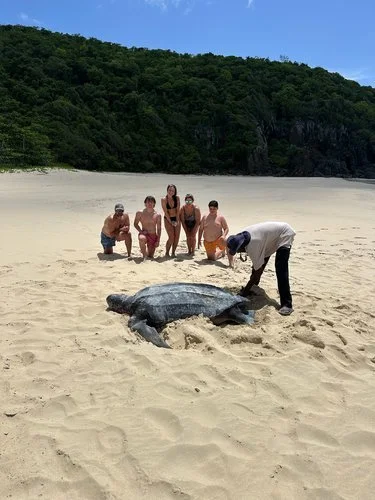
Image: Nesting sea turtle / Credit: Island Roots Charters
November is at the tail end of sea turtle hatching season in the Virgin Islands. If you are on the beach at first light or after dark in early November look out for sea turtle hatchlings crawling their way from their sandy nests to the sea.
During a charter trip with Island Roots Charters through November, it is still quite common to swim with sea turtles in the open water at snorkeling stops. Turtle sightings are among the most memorable part of most charter boat trips. November is great for underwater adventures like turtle watching because of the improving water clarity that occurs around this time.
Tourism, Travel Costs, and the Thanksgiving Surge
Early November (through November 20) is still considered low season in terms of the deals you can find. Some hotels have not fully transitioned back to high-season rates. Restaurants are ramping up as they prepare for Thanksgiving. Beaches and anchorages are far less crowded than they will be in December. The weather is improving fast, so you get conditions that can feel like high season without the same price tag. Charter boat trip availability is still good compared to December and January, when bookings fill up far in advance.
Thanksgiving week changes all of that, and this is when November is considered the beginning of high season. Families traveling for the holiday drive one of the biggest tourism surges of the year in the Virgin Islands. Villa rentals often have minimum-stay requirements around the holiday, charter boats fill up, and popular restaurants can be difficult to get into without a reservation. Travel costs for flights and accommodations during Thanksgiving week in St. John are priced at high-season rates.
Sailing Conditions
The return of the trade winds in November is a big welcome to those who love to sail. Anyone sailing from St. John benefits directly from the northeast breeze in the 10 to 15 knot range, which makes for a fast, comfortable sail out to Jost Van Dyke or Norman Island. The channel crossing from St. John to the BVI may be glassy in the morning and then picks up wind as the day goes on, which is what you want on a day charter (smooth out, and fast, fun return).
Mosquitoes
Mosquitoes follow rain and because we tend to have a lot of rain in November there will definitely be mosquitoes. You will want bug spray for sunset hours and any time you are in the shade. One great thing about charter trips are that there are less mosquitoes on the beaches and out on the open water. When we’re sailing against the wind, forget about the mosquitoes altogether!
Power Outages In November
Power outages are not too common in November compared to other times of year. It is worth noting that the USVI grid is far less reliable than the mainland and outages happen throughout the year. If you are staying in a villa, check whether the property has a generator.
Ripe Papaya and Citrus
November is when papaya and citrus fruits ripen in the Virgin Islands. It’s worth enjoying some fresh fruit if you are here in person.
Papaya is usually available year-round in the Virgin Islands, since these trees fruit continuously in the tropical climate here. That said, they are at their best in November as the heat and rainfall of hurricane season give way to drier, slightly cooler conditions. Papaya fruit ripens to turn a deep golden yellow and the flesh becomes sweeter and more fragrant than at other times of year. You can easily spot the trees throughout St. John's hillsides if you know what to look for.
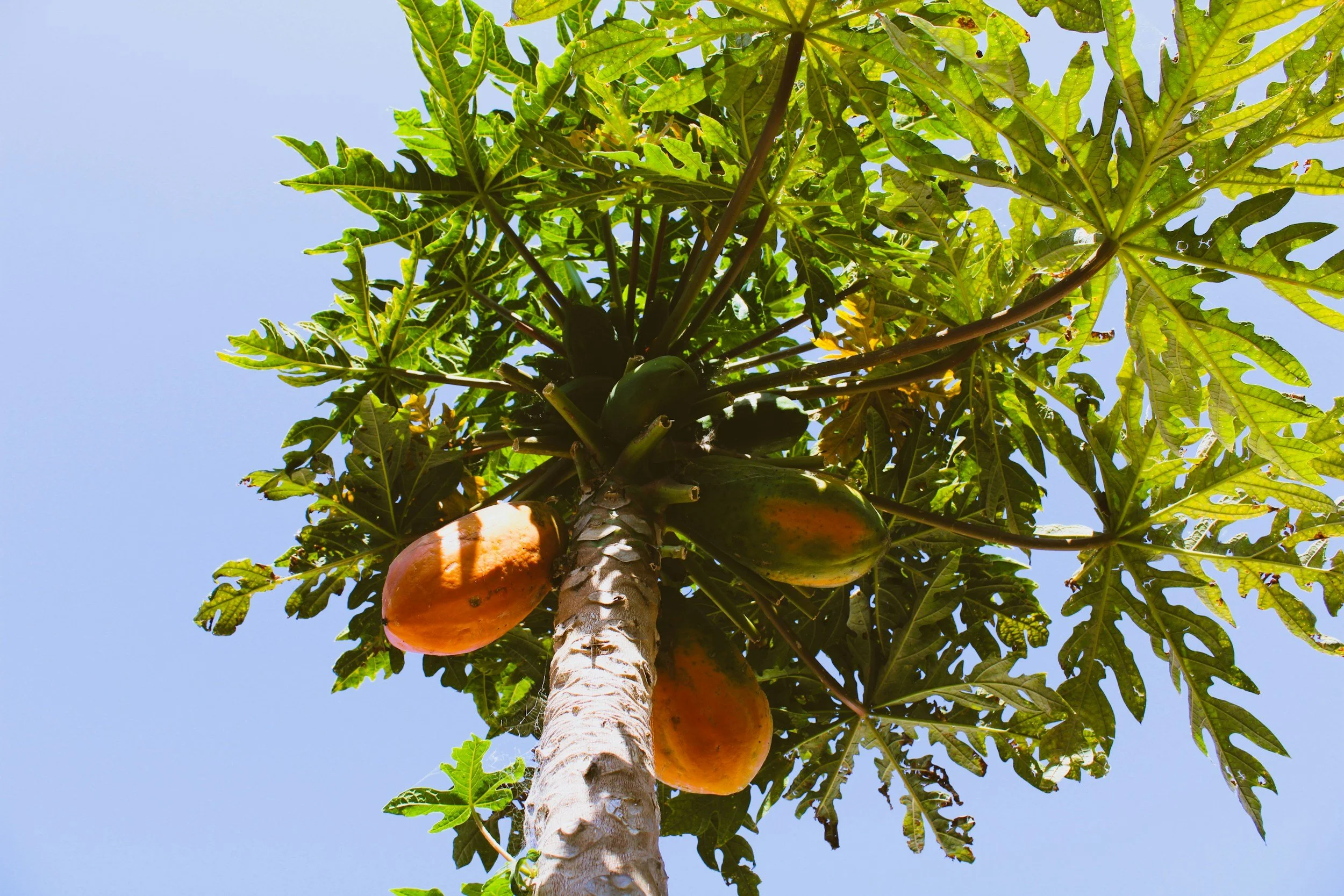
Image: Papaya tree / Credit: Brenda Melgoza @cali_mom88 via Unsplash
Finding good local papaya on St. John takes a little intention. The island does not have a significant commercial agricultural sector, and most produce at the larger markets like Starfish comes in by boat from off-island. For local fruit, the small roadside stands and community sellers are the better bet. Marta, who sets up near the Lutheran Church in Cruz Bay, is a well-known local produce vendor who often has tropical fruit in season. Nature's Nook in Cruz Bay and the Coral Bay Garden Center (sometimes called Josephine's) on the east side of the island are two other spots locals point visitors toward for seasonal produce including papaya. On St. Thomas, the Saturday morning market at Market Square in Charlotte Amalie brings in local growers selling seasonal produce including citrus and tropical fruit.
Citrus in November includes early-season key limes, which are essentially available year-round on the islands, and the beginning of the season for larger citrus including oranges and grapefruit, which peak through December and January. The local citrus is noticeably different from what you find at home, sweeter and more aromatic from the tropical growing conditions, and worth picking up at any roadside stand you come across.
Wahoo & Yellowfin Tuna Are In-Season

Image courtesy Just Fish St. John
November is a month to fish offshore for wahoo. Wahoo season is from September through May, but November really marks the time when catches are more reliable. That’s because the cooling water that comes with the returning trade winds attracts wahoo, along with yellowfin tuna into the offshore waters near St. John in more plentiful numbers that aren’t present during the summer heat. Look more into St. John fishing charters here.
Prime places to catch the fish: The best offshore fishing spots around St. John are around North and South Drop, which are two underwater ledges where the ocean floor drops around 80-120 feet, all the way down to 600-1,800 feet. The South Drop is about eight miles south of St. John. This is where the wahoo and yellowfin tuna concentrate in November, hunting baitfish along the ledge. The North Drop, off the north coast of St. Thomas, is actually more known for blue marlin in the summer months but it does attract tuna and wahoo in November.
How to catch wahoo in the Virgin Islands: Wahoo are aggressive, fast-striking fish that can reach speeds of up to 50 miles per hour, which is most of why they are such a prize game fish. They respond best to high-speed trolling with diving lures that are dropped 15 or more feet below the water, such as Yo-zuri or Rapala X-Rap Magnums. Ballyhoo and feather lures also work well. Yellowfin tuna respond to lighter tackle better.
Where to buy fresh catch around St. John: Redditors mention Calabash Market on the east side having fresh fish for sale, with the caveat that they sell out fast. Dolphin Market is noted as well, with a caveat that there is not a good selection. Starfish Market is also worth checking. The Frenchtown Fish Market on St. Thomas is a more established option on the west side of Charlotte Amalie. Restaurants like Woody's in Cruz Bay are known to prepare your own catch for you if you come in from a fishing charter with something to cook.
How to cook wahoo: Wahoo is the best catch to eat in the Caribbean, at least many of the captains and fishing guides who fish these waters every day say so. The meat is firm, lean, and mildly sweet. The texture is similar to tuna steak. Because it is lean wahoo can easily dry out fast when overcooked, so prepare it with speed and heat in mind. To be specific: grill wahoo steaks over medium-high heat for ~ 3 to 4 minutes per side. Wahoo is done when the flesh turns opaque and flakes easily. A simple marinade of olive oil, fresh lime juice, garlic, salt, and pepper brings out the natural flavor. For Caribbean-style prep, blacken the fillets in a cast iron pan with a butter base and a mixture of paprika, cayenne, thyme, and garlic, and then serve over rice with some plantains. Wahoo also makes exceptional sashimi and poke bowls when you get it very fresh. If you have access to a grill at your villa, a wahoo fillet finished with a mango salsa (diced mango, red pepper, jalapeño, cilantro, lime juice) is about as perfect as a St. John dinner gets.
Book Your Charter Trip In November
November is one of the most underrated months to visit St. John for a custom USVI / BVI charter boat trip. The first three weeks of the month offer cooler weather, lower prices, lighter crowds, and some of the best fishing of the year. The trade winds are back, the humidity isn’t as bad, and the water clarity is great for diving and snorkeling. Wahoo is running and the papaya is ripe. Thanksgiving week brings the island to life. November is not the month to overlook.