Salt Island, BVI — A Complete Guide
Salt Island is a tiny .3 acre island in the British Virgin Islands, with its center sitting at the following coordinates:18.373019, -64.526499. It’s situated about 5 miles southeast of Road Town, the largest city on Tortola. Salt Island is part of the Little Sisters chain, which also includes Peter Island, Norman Island, Cooper Island, Ginger Island, and Dead Chest Island.
Salt Ponds Are The Main Attraction
Salt Island is best known for its salt ponds. There are two historic salt ponds to which visitors can hike and see where salt was harvested in the past. Local residents would sell this salt to passing British Royal Navy sailors who used the vital mineral for preserving food for their journeys.
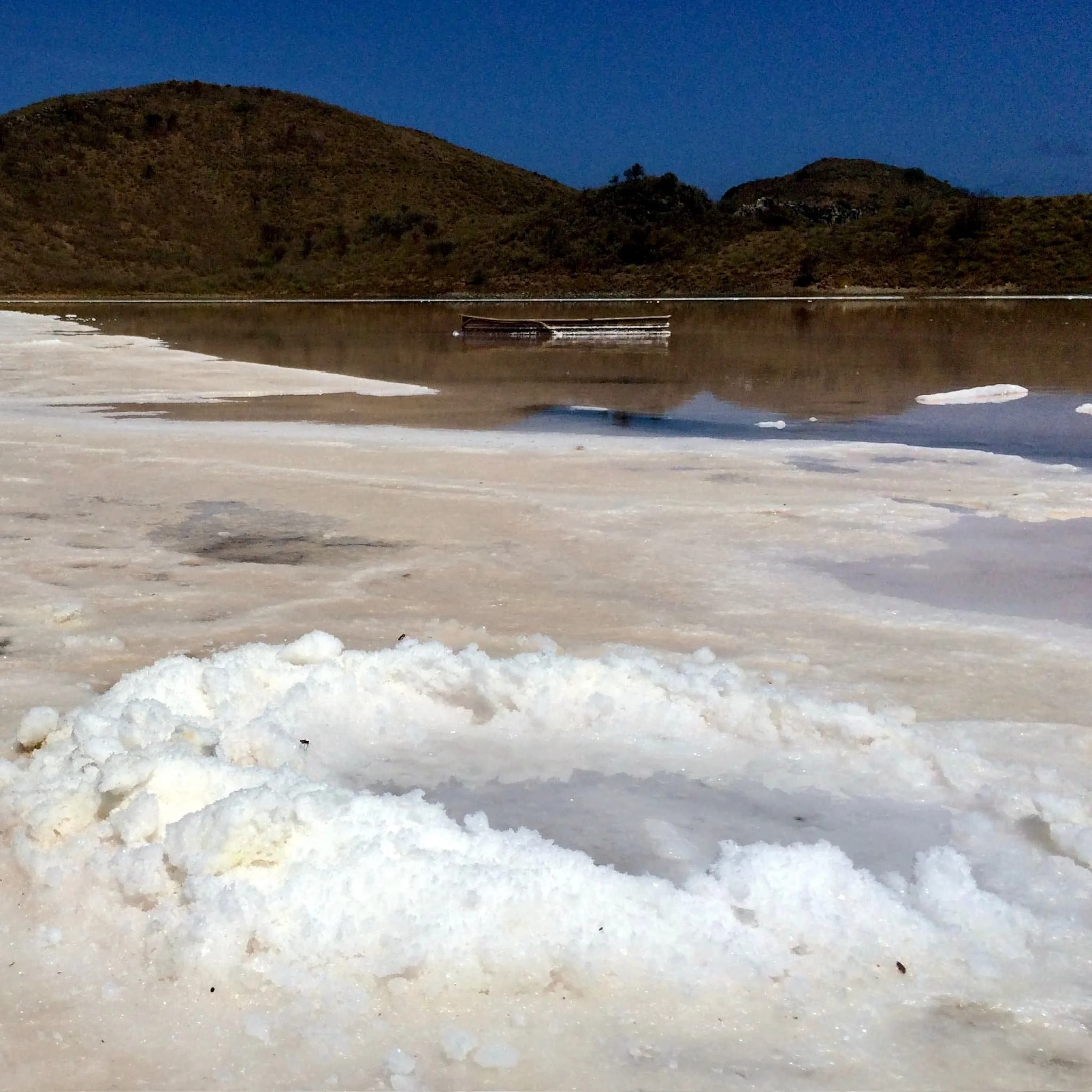
Image of a salt pond on Salt Island, BVI / Credit: Island Roots Charters
Swimming In Salt Ponds
Some visitors enjoy wading into the salt ponds. It’s easy (and fun) to float in these super salty waters, as the salt increases the density of the water, which in turn increases the buoyancy. A caveat: Salt ponds across the Virgin Islands — including ones on Salt island — only produce salt during extended dry seasons. Since it’s weather dependent, it can be hit or miss for guests.
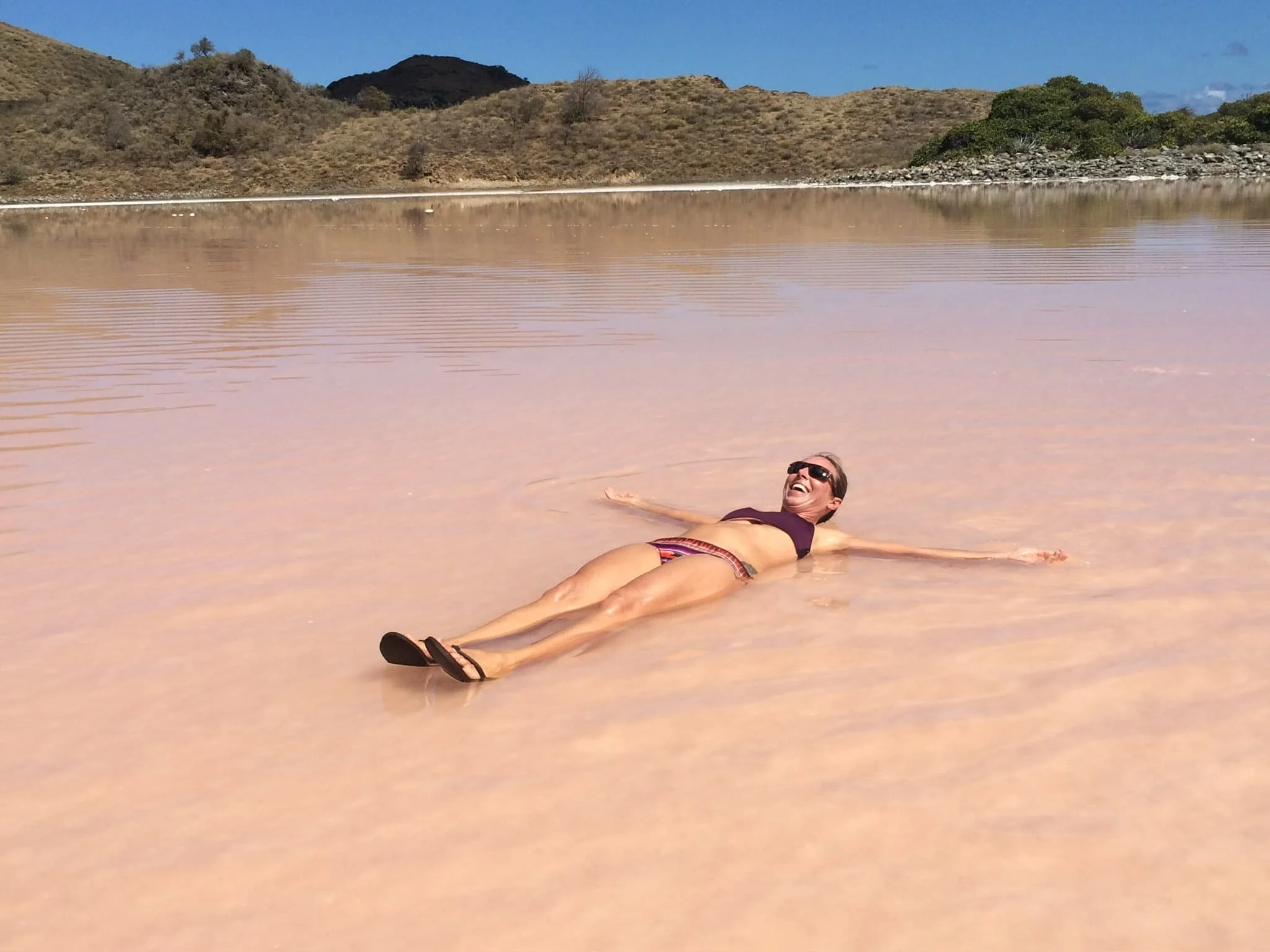
Image: Jill Siska, co-owner of Island Roots Charters, floating in a salt pond on Salt Island / Credit: Island Roots Charters
Salt Island Is Best for Day Trips
Even if someone did want to pack in the necessities, there are no camping spots or designated areas to set up a tent or place to sleep overnight here, making Salt Island more of a day trip destination. It makes for a great stop for our guests who book a custom BVI charter trip.
Salt Island As a Haunted Place
Many divers also visit Salt Island to explore the RMS Rhone, which is purportedly the most famous ship wreck in the Caribbean. The RMS Rhone was a steamer charged with delivering mail to British Territories, until the San Narciso, a devastating Category 3 hurricane sunk it on October 29, 1867, killing all 123 sailors on board. A mass grave containing those whose bodies were recovered can be seen on Salt Island today, surrounded by stones. Salt Island, and the surrounding waters are thought to be haunted.
Reports of Underwater Lights And Ghost Ships
Divers have reported unexplained spectral lights that appear underwater. There are also reports of ghost ships that appear as misty forms, and then disappear just as quickly. Naturally with any tale of ghosts at sea on a mysterious island, there follows other legends of buried treasure on Salt Island, possibly left there by Blackbeard himself.
No One Lives On Salt Island As of 2026
As of 2026, there are no permanent residents on Salt Island, only dilapidated houses left from back when around 100 people had lived there as salt harvesters since the 17th century (shortly after Dutch settlement in 1648).
After the 1960s-1970s when tourism began booming on Tortola, the remaining Salt Islanders left for better paying jobs. However, not everyone left. A few stayed on, with the last one being Henry Leonard, who remained there until 2008.
One Pound Of Salt As Annual Rent
Because the British government owns Salt Island, since 1867 the residents paid the British Monarch (at that time, Queen Victoria) a tribute of one pound of salt as rent to stay on the island. BVI governor John Duncan revived this tradition in 2015 when he sent Queen Elizabeth II a bag of salt for her birthday.
Prehistoric Use
Prior to Dutch settlement, those indigenous to the area ( Arawaks Carib), since around 300 B.C., may have also harvested salt here.
How Salt Island And Its Salt Ponds Were Formed
Salt Island exists along the line where the Caribbean Plate meets the North American Plate. Its was formed millions of years ago as the intense pressure from the North American Plate sliding under the Caribbean Plate lifted ancient volcanic seafloor and cooked it into an amalgam of metamorphic and igneous rock that ascended into a land mass that rose above the sea. The jagged surface we can see today is caused by the weathering and shaping of millennia of erosion.
The island’s famous salt ponds were not formed by seepage into lava vents as it is commonly thought, but, as noted by a research paper titled “Variable hydrology and salinity of salt ponds in the British Virgin Islands”, open coastal bays that were eventually cut off from the sea by the accumulation over time of coral debris and sand. These enclosed basins trap seawater, which evaporates under the intense Caribbean sun to create the natural salt deposits we know as the two salt ponds on Salt Island, BVI today.
The Rules About Taking Salt From Salt Island
Visitors often try to collect a bit of salt to take with them as a souvenir. There have been some comments online about how it is illegal because the locals own it (and it should be purchased from residents), or that the king of Britain owns it. However, neither The Crown nor local residents are there to patrol the salt. Someone made a joke on Facebook about how funny it is to present a bag of salt from Salt Island to British Customs, as the designated “rookie” officer will think they just caught Tony Montana. Do not try this. The reality though is that tourists are usually covered in salt by the end of the trip, and have no choice but to take it with them everywhere until they can find some fresh water to rinse (and scrub) it off.
Flora & Fauna
There are plants and animals on and around Salt Island. The plants most visitors notice the most are sea grape and yucca, while the animal life includes the endangered hawk’s bill turtle, and the Salt Island iguanas, which have adapted to the island’s especially extreme arid environment.
How To Get From St. John, USVI To Salt Island, BVI
Salt Island is about 20 miles by private charter boat from St. John USVI, though technically as the seagull (or drone these days) flies, it’s more like 12-13 miles away. In terms of actual travel time, it takes about 45 minutes by boat for us to get from Coral Bay, St. John to where we anchor at Salt Island.
A private charter boat is the only way to get to Salt Island, as there are no water taxies, ferries, or aircraft landing zones in the area, nor are there roads that connect this little island to anything else. It’s one of those special places on Earth that someone might feel a sense of total privacy because it is so remote, surrounded by the Caribbean Sea. There are no businesses, sources of potable water, electricity, or food sources on Salt Island either. It’s not a place anyone can generally stay for long.